
Key takeaways
- Udeer Robotics (3231.HK) listed on the Hong Kong Stock Exchange main board on 9 September 2026 at an issue price of HK$14.45. It opened at HK$35, a gain of more than 142%, valuing the company at roughly HK$14.5 billion.
- The Hong Kong public offering was subscribed 140.02 times, with retail investors far more enthusiastic than institutions.
- The number that matters: cumulative sales of over 114,600 robots to more than 5,100 customers worldwide. By 2025 revenue it is China's third-largest commercial delivery robot supplier, with a 9.8% share.
- Counterpoint Research data for the first half of 2026: of global humanoid robot shipments, entertainment, exhibitions, education and data collection together still account for more than 60%, while smart manufacturing is only 13% and warehousing 5%.
The machine you walked past
Have you ever met one in a hotel corridor — a chest-high thing on wheels? It does not speak. It stops politely and waits for you to pass. You probably stepped around it without a second thought.
On 9 September, the company that builds those machines rang the bell.
What 114,600 means
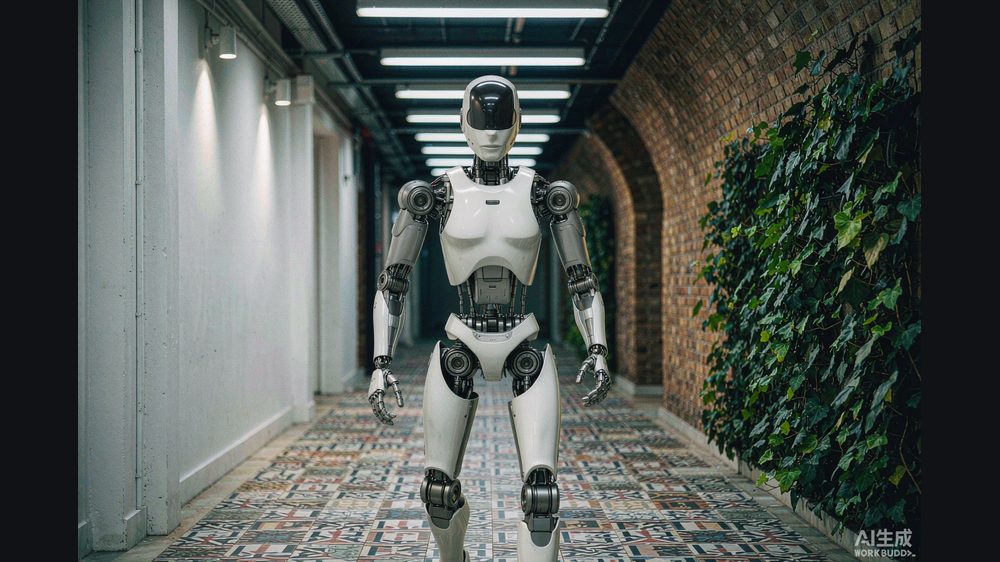
Most people's image of a robot is still a humanoid doing a backflip on a trade-show stage. But the robots actually moving around China do not look like people. They look like a cabinet on wheels. They ride the lift by themselves, step around pedestrians by themselves, and find room 803 by themselves.
114,600 units means this is no longer exotic:
- The mid-range or better hotel you stayed in very likely used one to deliver your takeaway or your toothbrush
- The hospital you visited may have had one moving medication or lab specimens
- The lobby of your office building probably has one patrolling or delivering after midnight
The first place "machines replacing people" actually happened was not the factory floor. It was the corridor outside your room.
It is also a fragmented market — Udeer is only third at 9.8%. That is the signature of an industry decided by delivery capability, unit cost and after-sales service, not by press conferences.
Why list now
The timing was pointed. On 8 September XPeng switched on what it calls the world's first automated production line for high-level general-purpose humanoids in Guangzhou. Around the same period Tesla was reported to have placed roughly 5,000 Optimus units of batch orders with core suppliers. On 16 September UBTech was due to begin first deliveries of its U1.
Humanoid robots are moving from the launch event to the loading dock. In that context Udeer offered a plainer story: there is no science fiction here, only 114,600 machines currently doing a job.
Capital responded to it. Hong Kong-listed large-model companies have had a rough stretch — Zhipu fell more than 10% in a day, MiniMax more than 5% — as the market discounts story-driven valuations. Robot assets with physical products, real customers and repeat purchases are being looked at again.
The temperature difference nobody should ignore
Here is the number that deserves more attention than the 142% open.
Counterpoint's data for H1 2026 shows that across global humanoid shipments, entertainment, commercial performance, education and data collection still make up more than 60% combined. Genuine smart manufacturing accounts for 13%. Warehousing and logistics, 5%.
Most robots sold are still performing, not working.
That is precisely why Udeer's 114,600 units are worth something. They were not bought to stand on a stand. They were bought to replace a person.
The distinction determines whether the opening price holds:
- A performance robot is a one-off transaction — when the exhibition season ends, so does the revenue
- A delivery robot has to run for three to five years; when it breaks someone must fix it, when it jams someone must rescue it, and whether the customer renews is the only real test
An order is not a delivery. A delivery is not a working machine. A working machine is not a repeat customer. None of those three gaps can be jumped.
What to do with this
First, detach the word "robot" from the humanoid shape. The things actually substituting for repetitive labour look like cabinets and small carts.
Second, watch delivery data, not launch events. Three numbers decide value: cumulative units delivered, customer renewal rate, and annual service fee per unit.
Third, if you work in a hotel or a hospital, learn your own robot economics. The monthly cost of one delivery machine is already below the total cost of employing one full-time deliverer in many cities.
Honest limitations
Opening-day price moves say nothing about whether a business is durable; 142% on day one is a sentiment reading, not a valuation. Market-share ranking by 2025 revenue depends on how "commercial delivery robot" is defined, and different research houses draw that boundary differently. The Counterpoint figures cover humanoid robots specifically and are not comparable to the delivery-robot category.
Sources: company prospectus and listing documents, Hong Kong Stock Exchange, Counterpoint Research. Information only — not investment advice.