
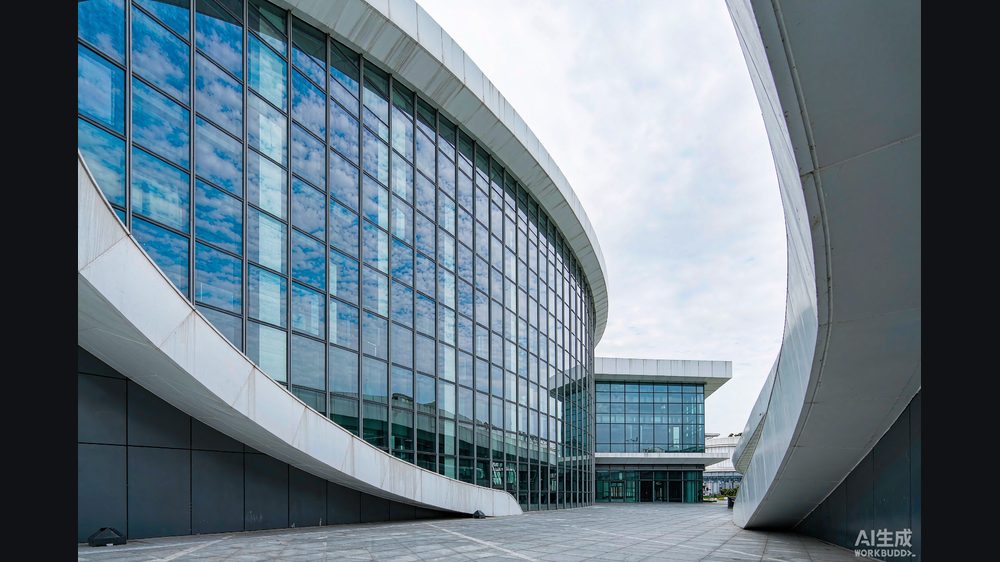
In a new data hall in western China, a technician walks past cabinets that are bolted down, cabled and switched off. The floor is polished, the cooling loops pressure-tested. Everything is ready except the demand.
The hall belongs to one of the country's largest cloud operators. Similar buildings are being commissioned across Guizhou, Inner Mongolia and Ningxia, sometimes before a single paying customer has signed.
That ordering — build first, fill later — is the defining fact of the buildout, and the hardest to see in a quarterly report.
Key takeaways
- Alibaba, Tencent and Baidu spent RMB 131.8 billion (≈ US$18.6bn / HK$145bn) on capital projects in Q2 2026, 2.1× a year earlier (company filings).
- All three ran negative free cash flow — Tencent's mostly a RMB 51.4 billion compute prepayment — so the buildout is carried by balance sheets and price rises.
- China's data-centre capacity should pass 24 GW by end-2026, against about 56 GW in the United States (SemiAnalysis).
- In March 2026 Tencent restored standard pricing on one model input (a 463% rise); Alibaba and Baidu lifted AI compute by up to 34% and 30%.
- National token volume hit 140 trillion a day by March 2026 (National Data Administration). Volume is not revenue.
The buildout is visible. The return is not
China's data-centre capacity is expected to pass 24 GW by the end of 2026, against roughly 56 GW in the United States (SemiAnalysis, 25 September 2026). The country operated 42 ten-thousand-card compute clusters (算力) at the end of 2025 (MIIT). The planning ministry puts 2026 investment in the "six networks" — the compute network is one — and related priority sectors above RMB 7 trillion (≈ US$986bn / HK$7.7tn) (NDRC, March 2026).
That is capacity, not utilisation.
Who actually pays
Alibaba, Tencent and Baidu spent a combined RMB 131.8 billion (≈ US$18.6bn / HK$145bn) on capital projects in the second quarter of 2026, 2.1 times the same period a year earlier, and all three reported negative free cash flow (company filings). Tencent's gap is largely a RMB 51.4 billion prepayment for compute; strip that out and its free cash flow turns positive. ByteDance, which is not listed, holds about one-fifth of delivered capacity, almost all of it leased rather than owned (SemiAnalysis).
Read those together: the industry is buying compute faster than it sells it, and the gap is financed rather than earned. There are three sources; only one is a customer.
The first is the cloud price list. In March 2026 Tencent Cloud restored standard pricing on one model input, a 463% increase on the promotional rate; Alibaba Cloud raised AI compute cards by 5% to 34%, Baidu Cloud by 5% to 30%, both effective from 18 April (company notices, 11 and 18 March). They followed two years of falling token prices: DeepSeek's V4.1-Flash lists at RMB 2 and RMB 8 per million input and output tokens, Doubao Lite at RMB 0.3 and RMB 0.6, Qwen3.7-Max at US$2.5 and US$7.5 (CGTN, 18 June 2026).
The second is the balance sheet. Depreciation starts when equipment is installed, not when it is sold; a three-year-old card decays at the same rate whether it serves one customer or none.
The third is municipal capital. Guangzhou launched a RMB 20 billion (≈ US$2.8bn / HK$22bn) AI industry fund in April 2026. City- and district-owned funds naming AI as one priority number nearly 200, holding more than RMB 160 billion (≈ US$22.5bn / HK$176bn) (Guangzhou municipal government, 14 April 2026). That money sits at the equity layer, absorbing risk that would otherwise reach a lender.
None of this is improper. Each moves the bill to a different year or balance sheet; none requires a Chinese enterprise to pay a price that covers its cost.
Three numbers that would settle the argument
Chinese operators disclose capacity, clusters and tokens, not what a card earns. If that changes, read these:
- Utilisation. 24 GW shows what could be switched on; the share of accelerators running paying inference shows what it is worth.
- Cloud gross margin by segment. Blended margins hide AI infrastructure sold below cost to win workloads that then stay.
- Resale prices for older cards. A rising secondary market suggests scarcity; a falling one suggests the installed base already exceeds demand.
Agents are the reason to expect demand to keep rising anyway. Agentic coding consumes 10 to 50 times the tokens of plain chat (CGTN, 18 June 2026), and national token volume rose from about 100 billion a day in early 2024 to 140 trillion by March 2026 (National Data Administration) — a real demand curve, whose profitability at RMB 0.3 per million tokens is open.
The constraint that decides the ending
The physical ceiling is memory, not concrete. CXMT's 2026 output of about 2 million HBM stacks supports only 250,000 to 300,000 Ascend-class packages, while SMIC can produce die for more than a million (SemiAnalysis estimate). That mismatch explains why Huawei's card prices rose sharply in 2026, with its rotating chairman saying supply is short and priority goes to domestic demand.
Scarcity is what allows price increases to stick. If memory supply loosens, the March rises become harder to defend and the depreciation bill arrives with less revenue behind it. If it tightens, customers pay more for less compute, and the buildout looks less like overcapacity than rationing.
Either way, the deciding variable is not the model leaderboard. It is how much of the installed base is working, and at what price.
Honest limitations
Capex and cash-flow figures come from company filings, but capital spending includes non-AI projects, and Tencent's reported free cash flow is distorted by a compute prepayment. No Chinese operator publishes accelerator-level utilisation or AI infrastructure revenue, so the central claim rests on capex, cash flow and price rises together. The March price changes cover selected SKUs. The cluster count measures announced clusters, not utilisation.
What readers can do now
- Operators: when a Chinese cloud quotes an unusually low price per million tokens, ask which accelerator generation serves it and for what committed term; the discount usually prices in hardware already depreciating.
- Investors: read cloud segment margin and free cash flow together, not capex alone; capex growth without margin recovery is a subsidy, whichever balance sheet holds it.
- Researchers: treat token volume as a demand proxy and nothing more, and ask for utilisation data before concluding anything about Chinese compute capacity.