
Key takeaways
- On 8 September 2026, Tencent's WeChat vision team open-sourced WeMM-Embedding, a multimodal embedding model released in 2B, 4B and 9B sizes.
- Benchmark results: the 9B model scored 80.6 on MMEB-v2, first place. The 2B scored 77.9, beating the previous best 8B open-source model.
- The model is not a research artefact. It is already deployed across WeChat Channels, Official Accounts and Moments, at billion-scale daily calls.
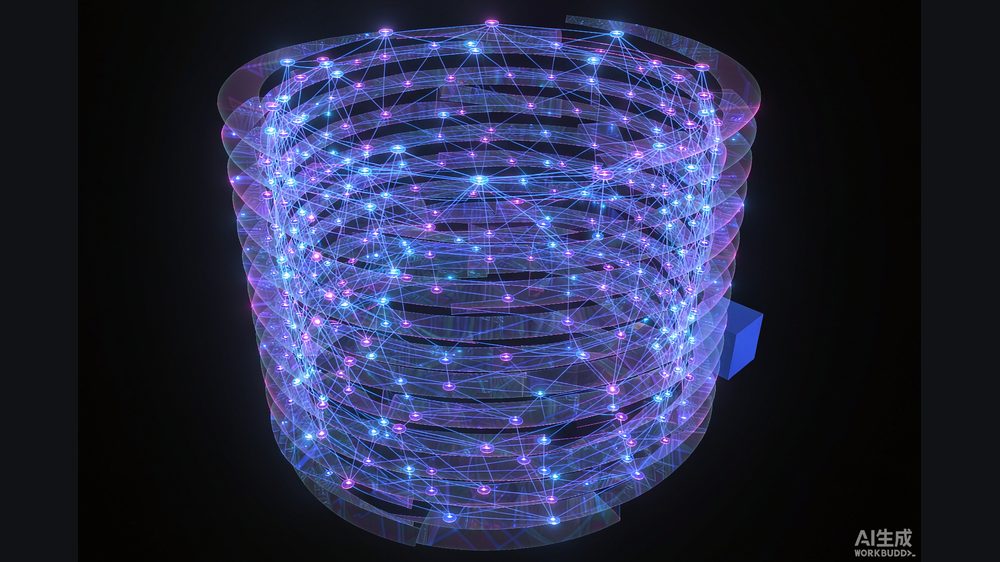
- Its job: translate text, images, video and mixed media into one shared mathematical space, so a machine can tell whether a video and a paragraph are about the same thing.
The small thing that has been working on you
You mention in a chat that you are thinking of buying something. Minutes later, the same product appears in your video feed.
You assumed coincidence. Something has been working in the background.
On 8 September, the team that built it gave part of it away.
What an embedding model actually does
Embedding models are never visible to users. They decide what users see.
Previously, a platform understood a video through its title, its tags, and whatever category the uploader selected. You write "weekend hike" and the system concludes the video is about hiking. Whether there are dogs in frame, or whether the route is difficult, it has no idea.
With multimodal embedding, the system reads the picture itself. Search for "hiking routes that are good with a dog" and it can surface videos that never used those words — because it recognised a dog and a mountain path in the footage. The nine images attached to an article are understood as a sequence, not as nine loose attachments.
The shift is from you telling the machine what this is to the machine working out what this is.
For platforms that is a jump in search and recommendation precision. For ordinary creators it means something more useful: content no longer has to be stuffed with keywords to be found.
A 2B model beating an 8B one
The headline result is the size inversion. A 2-billion-parameter model scoring 77.9, ahead of the previous open-source standard set by an 8-billion-parameter model, is what happens when a model is trained and validated against a real production workload rather than a benchmark set.
That is the part worth dwelling on. WeMM-Embedding has already been validated at billion-calls-per-day scale on a product used by a very large share of a billion-plus people. It enters the open-source world with a service record, not a promise.
Why give it away
Handing out a model that runs on billion-scale production traffic looks like a loss. Lengthen the time horizon and the calculation is clear.
Open source in 2026 is no longer mostly idealism. Recent months have been unusually dense: ModelBest released MiniCPM5-2B with the full training recipe attached; Zhipu made the 753-billion-parameter GLM-5.3 publicly downloadable; DeepSeek released multimodal MoE weights under an MIT licence.
What is underneath is a standards contest. Whose model more developers use, and more companies deploy, becomes the de facto way machines understand content. Open source here is not charity. It is land acquisition.
WeChat's version of the move is shrewder than most: run it first in a scenario a billion people use every day, then release it. That is an open-source launch carrying a reference you cannot fake.
What changes for you
In the near term, three things.
Search gets better — especially for the request you cannot name precisely. The noodle shop with the red signboard. That kind of search becomes possible.
Recommendation gets narrower and closer — good because it fits you, bad because the filter bubble gets thicker. Noticing that is itself a defence.
Opportunity for small creators gets larger. Much of what small accounts could not beat large accounts on was keyword operations. Once the platform genuinely understands the content, quality carries more weight.
When machines start reading images, the era of stuffing keywords to chase traffic ends.
Three things worth doing now
One: treat your cover image and your first image seriously from today. They are no longer decoration. They are the core information the machine reads, and it reads them faster than your headline.
Two: write captions that genuinely describe the picture. Not a tag pile — one sentence in plain language saying what is in the frame and what is happening.
Three: break your own feed on purpose. The better a platform understands you, the easier it is to shut you into a small room.
Honest limitations
MMEB-v2 is one benchmark among several for multimodal retrieval, and leaderboard positions shift quickly as new submissions arrive. The "billion-scale daily calls" figure is the team's own, reported without an independent audit. Deployment inside WeChat does not imply the open-sourced weights are identical to the production model.
Sources: WeChat vision team open-source announcement (8 September 2026) and subsequent media reporting. Information only.